
Medicare Part A & B
Original Medicare
Medicare Parts A and B are the two main parts of Medicare provided by the federal government.
- Medicare Part A helps cover hospital care, skilled nursing facility care, hospice care, and some home health care.
- Medicare Part B helps cover doctor visits, outpatient care, preventive services, and some medical supplies.
Medicare is a great starting point, but it does not cover everything. You may still have premiums, deductibles, copays, and other out-of-pocket costs.
Most people qualify at age 65, though some may qualify earlier due to disability, End-Stage Renal Disease, or ALS.
Your enrollment timing depends on your situation, especially if you are still working or covered by an employer plan.
Medicare A & B Costs and Coverages - 5min
What does Medicare Part A Cover?
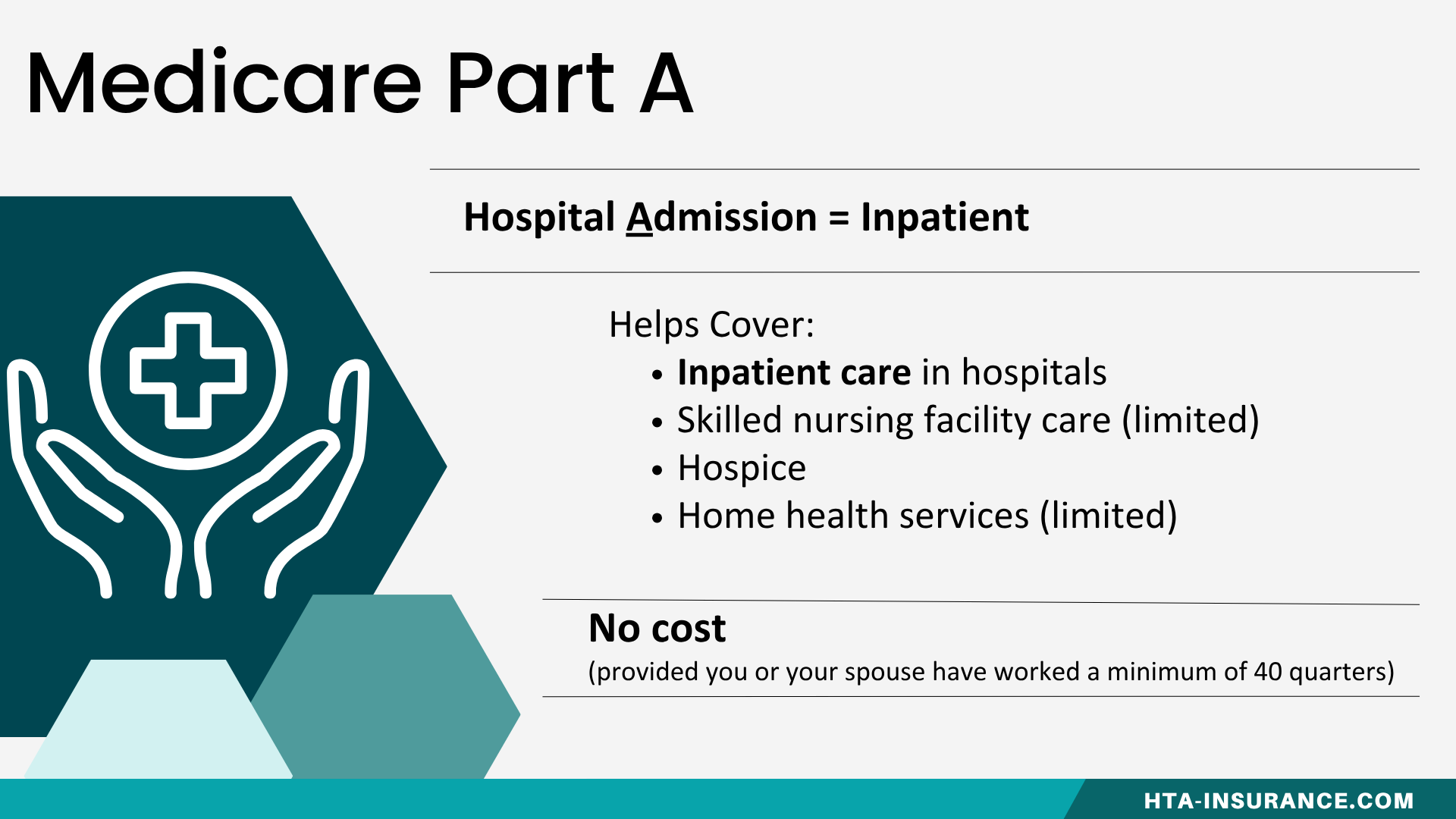
Medicare Part A is your inpatient hospital coverage.
- Inpatient hospital stays
- Skilled nursing facility care after a qualifying hospital stay
- Hospice care
- Some home health care
What does Medicare Part B Cover?
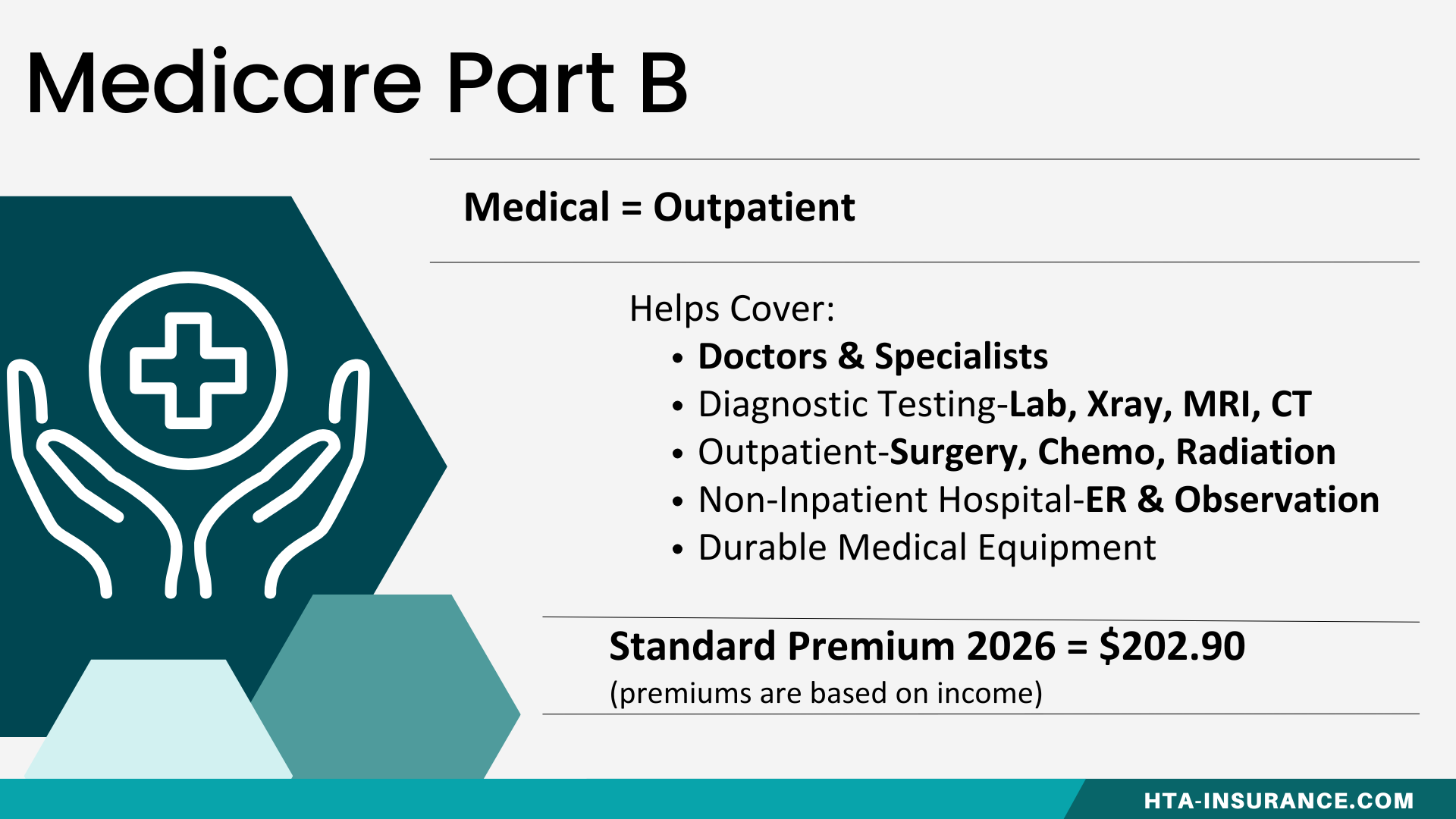
Medicare Part B is your outpatient medical coverage.
Part B helps cover outpatient care and medically necessary services:
- Doctor visits
- Specialist visits
- Preventive services
- Diagnostic testing
- Outpatient surgery
- Emergency room services
- Hospital observation stays
- Chemotherapy and other outpatient treatments
- Durable medical equipment, when approved by Medicare
Does Medicare A and B pay 100% of my medical expenses?
No. Original Medicare does not cover 100% of your medical expenses.
Medicare Parts A and B provide strong baseline coverage, but you may still be responsible for:
- Deductibles
- Coinsurance
- Copays
- Services not covered by Medicare
- Costs above Medicare-approved amounts in certain situations
One of the most important things to understand is that Original Medicare does not have a maximum out-of-pocket limit. That means there is no built-in cap on what you could spend in a year if you only have Medicare Parts A and B.
This is one reason many people consider additional coverage, such as a Medicare Supplement, Medicare Advantage plan, and/or Part D prescription drug plan, depending on their needs.
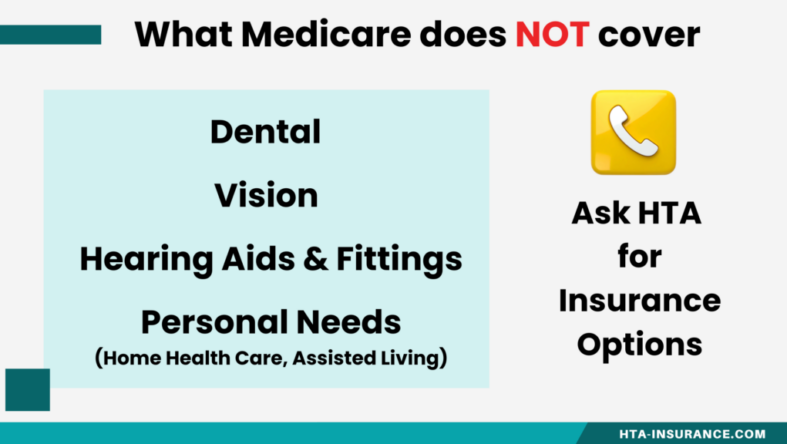
Common services not generally covered by Medicare Parts A and B include:
- Most dental care
- Dentures
- Routine vision exams
- Most eyeglasses or contact lenses
- Hearing aids and exams for fitting hearing aids
- Routine foot care
- Cosmetic surgery
- Long-term custodial care
- Most care received outside the United States
View the Medicare Out of Pocket Costs here
There are also certain services that are not coverage by Medicare. See more information on what Medicare does not cover at medicare.gov
What is a Medicare Supplement?
Enrolling at the Right Time Matters
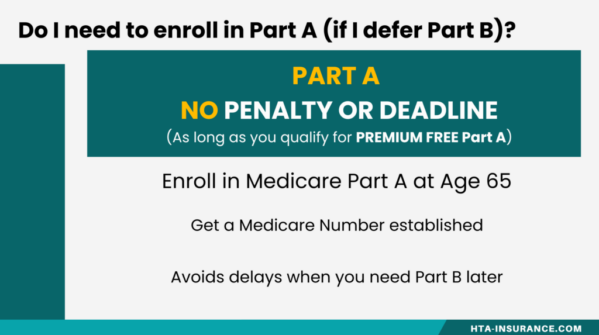
The right time to enroll in Medicare depends on your work status, employer coverage, spouse’s coverage, income, and health needs.
Some people should enroll at age 65, while others may be able to delay Part B if they have qualifying employer coverage.
Delaying without the right coverage could lead to late enrollment penalties.
Not sure about your timeline? HTA can help you review your options.
Key Takeaways
- Medicare Parts A and B are the foundation of your Medicare coverage.
- Part A helps cover inpatient hospital care.
- Part B helps cover doctors, outpatient care, testing, preventive care, and other medical services.
- Original Medicare is valuable coverage, but it does not pay for everything and does not include a maximum out-of-pocket limit.
- Not sure when to enroll? Consult with an HTA advisor to review your personal Medicare timeline.

Visit the following pages for more information on plan options
Medicare Supplement Plan Options
Medicare Advantage Plan Options
Medicare Part D Prescription Plans