
Subcontractors

Subcontractors & Certificates of Insurance (COI)
Collecting COIs from every subcontractor helps verify that your subcontractor actually carries the insurance they claim to have.
We recommend you confirm insurance with EVERY subcontractor.
- General Liability COI
- AND Workers Compensation COI OR written proof that they are not required to carry it.
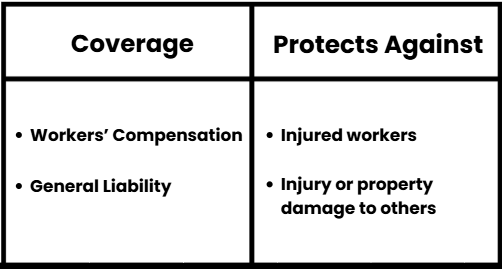
Before work begins, verify:
✔ Workers’ Compensation
✔ General Liability
✔ Policy effective dates
✔ Insurance limits
✔ Certificate holder information
If required by your contract, ask for:
- Additional Insured
- Waiver of Subrogation
- Primary & Non-Contributory wording
Contact HTA for a Subcontractor Checklist.

What If a Subcontractor gets hurt?
If a subcontractor is injured while working for you and they do not have their own Workers’ Compensation insurance (or proper exemption documentation), your Workers’ Compensation policy could end up paying the claim.
In some situations, you could also be responsible for additional premium during your audit.
A 1099 Does Not Automatically Mean Someone Is a Subcontractor
Issuing a 1099 form does not automatically make someone a subcontractor.
For Workers’ Compensation purposes, insurance companies may look at how the person works for your business, not just how they are paid.
Understanding the difference between an employee and a subcontractor can help you avoid misclassification issues and unexpected charges during your Workers’ Compensation audit.

Employee
A worker may be considered an employee if they:
- Receive regular wages or ongoing pay
- Follow a schedule set by your business
- Have regular or ongoing work available
- Work under your direction or instruction
- Use tools or equipment provided by your business
Subcontractor
A worker may be considered a subcontractor if they:
- Are paid per project or task
- Work under a contract or service agreement
- Set their own schedule within project deadlines
- Work independently and control how the job is performed
- Provide their own tools and equipment
What If My Subcontractor Says They Are Exempt?
If a subcontractor says they are exempt from Workers’ Compensation:
- Be careful and do not rely on a verbal explanation
- Ask for documentation showing why they are exempt
- Keep the documentation on file for your audit
- Make sure the documentation applies to the dates they worked for you
- Confirm state-specific requirements, since exemption rules can vary
Without proper documentation, you may be responsible for their Workers’ Compensation exposure during your audit.
Pennsylvania Guidance
In Pennsylvania, the documentation you collect may depend on how the subcontractor’s business is structured.

Top 5 Mistakes Business Owners Make
- Hiring subcontractors without getting a current COI.
- Assuming a 1099 worker is automatically a subcontractor.
- Waiting until the audit to collect insurance certificates.
- Accepting expired insurance certificates.
- Not requiring subcontractors to carry the proper insurance.
Trying to track down subcontractors months later during a Workers’ Compensation audit is one of the most common reasons businesses end up paying additional premium.
Preparing for a Smooth Audit